Lucca is a small city with a great history, that is magically preserved. The Roman city, the Medieval city, the Renaissance city, the nineteenth century city: traces of all of these may still be found here.
Over the centuries, the city has cultivated its unusual diversity mixed with contradictions. Ever jealous of its autonomy, Lucca was an independent city-state up to 1847, on the threshold of the unification of Italy. The city was traditionally close to the papacy, but in the mid-1500s it became one of the capitals of the Reformation (between 1542 and 1545, the city was home to Piero Martire Vermigli and Bernardo Ochino). It was proudly enclosed within its walls (which the Luccans bought back from the State) but, with its merchants and its silk, it remained active for centuries in the main European markets.Lucca has many beautiful attractions.
Florence
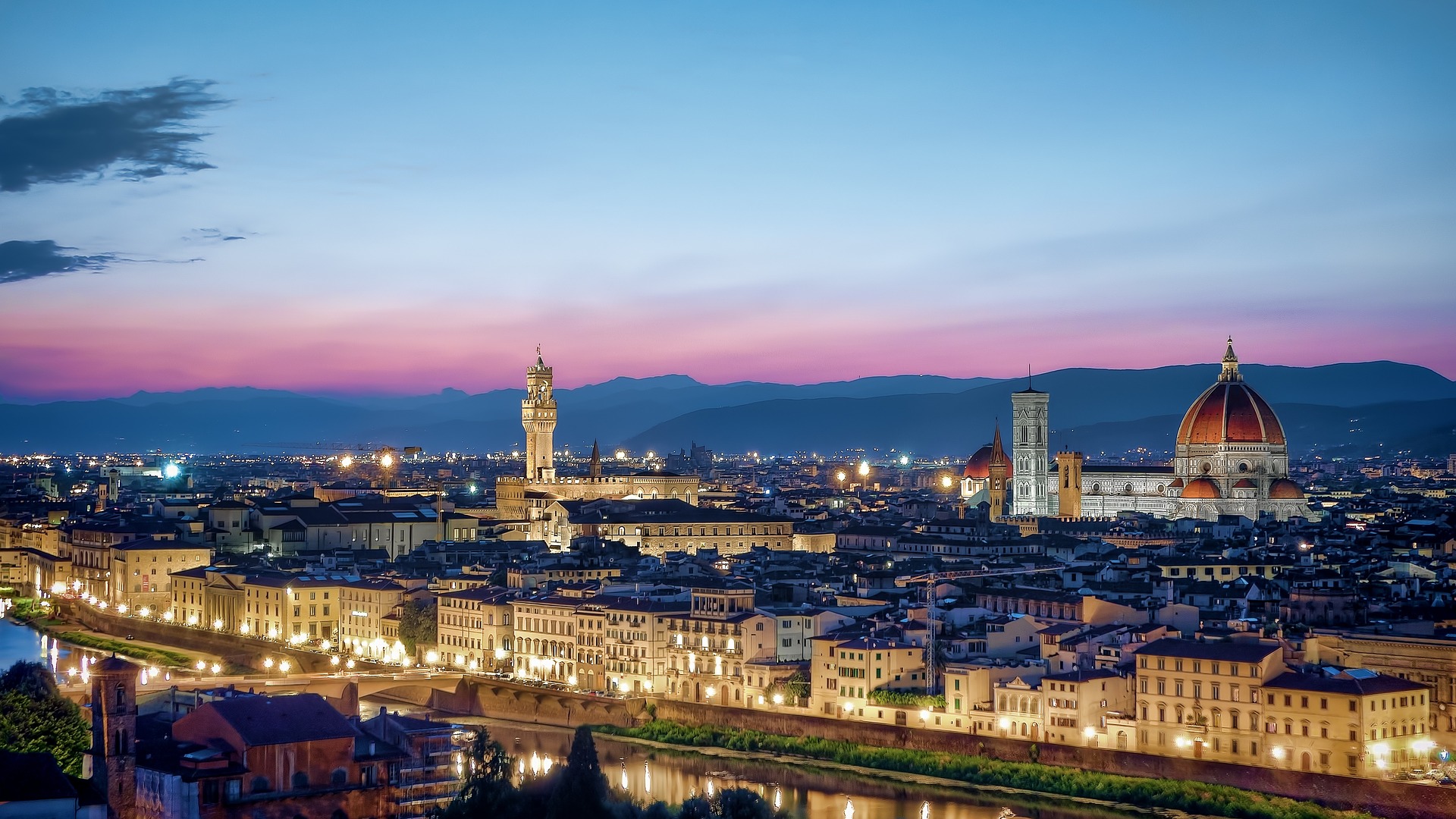
Florence originated as a Roman city, and later, after a long period as a flourishing trading and banking medieval commune, it was the birthplace of the Italian Renaissance. According to the Encyclopædia Britannica, it was politically, economically, and culturally one of the most important cities in Europe and the world from the 14th to 16th centuries.
The language spoken in the city during the 14th century came to be accepted as the model for what would become the Italian language. Thanks especially to the works of the Tuscans Dante, Petrarch and Boccaccio, Florentine dialect, above all the local dialects, was adopted as the basis for a national literary language.
Starting from the late Middle Ages, Florentine money—in the form of the gold florin—financed the development of industry all over Europe, from Britain to Bruges, to Lyon and Hungary. Florentine bankers financed the English kings during the Hundred Years War. They similarly financed the papacy, including the construction of their provisional capital of Avignon and, after their return to Rome, the reconstruction and Renaissance embellishment of Rome.